Engine Parts Explained: Compression Explained — Why Compression Matters & Low Compression Fixes
Engine Parts Explained: Compression Explained — Why Compression Matters & Low Compression Fixes
Introduction
An internal combustion engine may look complicated from the outside, but at its heart it works on a few fundamental principles. Among these, engine compression is one of the most critical. Compression directly affects power, fuel efficiency, emissions, engine smoothness, and long-term reliability.
Many common car problems—hard starting, poor mileage, lack of pickup, engine misfire, excessive smoke—can be traced back to low compression. Unfortunately, compression issues are often misunderstood or ignored until the engine condition becomes serious.
In this in-depth guide, we will explain engine compression from the basics to advanced concepts, how it relates to engine parts, why it matters so much, how to identify low compression, and the best fixes for low compression problems. This guide is written for car owners, automotive enthusiasts, and anyone who wants to understand engines beyond surface-level knowledge.
1. What Is Engine Compression?
Engine compression is the process of squeezing the air–fuel mixture inside the engine cylinder before ignition. This happens during the compression stroke of a four-stroke engine.
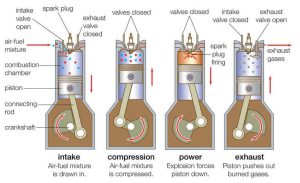
The Four Strokes of an Engine (Quick Recap)
👉🏻Intake Stroke – Air (or air-fuel mixture) enters the cylinder
👉🏻Compression Stroke – The piston moves upward, compressing the mixture
👉🏻Power Stroke – Spark ignites the compressed mixture, creating power
👉🏻Exhaust Stroke – Burnt gases exit the cylinder
Compression occurs just before combustion, and it determines how powerful and efficient the explosion will be.
2. Key Engine Parts Involved in Compression
Compression is not handled by one part alone. It is the result of multiple engine components working together with tight tolerances.
2.1 Piston
The piston moves up and down inside the cylinder. During compression, it travels upward, squeezing the air-fuel mixture into a smaller space.
2.2 Piston Rings
Piston rings form a tight seal between the piston and the cylinder wall. They:
🌟Prevent compressed gases from leaking into the crankcase
🌟Control engine oil
🌟Maintain compression pressure
👉🏻Worn or damaged rings are a major cause of low compression.
2.3 Cylinder Walls
Smooth, properly honed cylinder walls are essential for sealing. Scratches, scoring, or wear reduce the ability to hold compression.
2.4 Valves (Intake & Exhaust)
Valves must close fully during compression. Even a small leak due to:
🌟Burnt valves
🌟Bent valves
🌟Carbon deposits
can drastically reduce compression.
2.5 Cylinder Head & Head Gasket
The cylinder head seals the top of the cylinder. The head gasket ensures no leakage between:
🌟Cylinder and coolant passages
🌟Cylinder and oil passages
🌟Adjacent cylinders
A blown head gasket often causes compression loss plus overheating.
👉🏻 What Is Compression Ratio?
The compression ratio compares the volume inside the cylinder when:
🌟The piston is at bottom dead center (BDC)
🌟The piston is at top dead center (TDC)
Example:
A compression ratio of 10:1 means the mixture is compressed to one-tenth of its original volume.
Why Compression Ratio Matters
🌟Higher compression ratio = more power & efficiency
🌟Lower compression ratio = safer for low-octane fuel but less power
Modern petrol engines typically range from 9:1 to 12:1, while diesel engines operate at much higher compression ratios.
👉🏻Why Engine Compression Is So Important
4.1 Power Output
Proper compression ensures maximum energy from fuel combustion. Low compression results in:
🌟Weak acceleration
🌟Sluggish engine response
🌟Reduced top speed
4.2 Fuel Efficiency
When compression is low:
🌟Fuel does not burn efficiently
⭐ECU compensates by injecting more fuel
🌟Mileage drops noticeably
4.3 Easy Starting
Low compression engines are harder to start, especially:
⭐In cold weather
⭐During early morning starts
4.4 Engine Smoothness
Uneven compression across cylinders causes:
🌟Engine vibration
🌟Rough idling
🌟Misfires
4.5 Emission Control
Poor compression leads to incomplete combustion, increasing:
⭐HC (Hydrocarbon) emissions
⭐CO (Carbon Monoxide) levels
👉🏻 What Is Low Compression?
Low compression occurs when one or more cylinders cannot hold the required pressure during the compression stroke.
Normal Compression Range (Petrol Engines)
⭐Typically 140–200 PSI
⭐Difference between cylinders should not exceed 10–15%
Anything below this range signals a problem.
👉🏻 Common Symptoms of Low Compression
⭐Poor pickup and acceleration
⭐Engine misfire
⭐Rough idle
⭐Increased fuel consumption
⭐White, blue, or black exhaust smoke
⭐Engine overheating
⭐Loss of engine power under load
Ignoring these symptoms can lead to complete engine failure over time.
👉🏻Main Causes of Low Compression
7.1 Worn Piston Rings
⭐Caused by high mileage
⭐Poor oil maintenance
⭐Overheating
7.2 Damaged or Burnt Valves
⭐Overheating
⭐Incorrect valve clearance
⭐Carbon buildup
7.3 Blown Head Gasket
⭐Coolant loss
⭐White smoke
⭐Engine oil contamination
7.4 Cylinder Wall Damage
⭐Poor lubrication
⭐Dirt ingestion
⭐Piston seizure
7.5 Timing Belt or Chain issues
Incorrect valve timing prevents valves from sealing properly during compression.
👉🏻 How Low Compression Is Diagnosed
8.1 Compression Test
A compression gauge is installed into each spark plug hole. Cranking pressure is measured cylinder by cylinder.
8.2 Wet Compression Test
A few drops of oil are added to the cylinder:
⭐Pressure increase → piston ring problem
⭐No change → valve or gasket issue
8.3 Leak-Down Test
Compressed air is introduced into the cylinder:
⭐Air escaping from intake → intake valve leak
⭐Air escaping from exhaust → exhaust valve leak
⭐Air bubbles in radiator → head gasket failure
👉🏻Low Compression Fixes (From Simple to Major Repairs)
9.1 Engine Decarbonization
Carbon buildup on valves can prevent sealing. Decarbonization helps when:
⭐Compression loss is mild
⭐Engine has carbon deposits
9.2 Valve Adjustment or Valve Job Fixes:
⭐Improper valve clearance
⭐Burnt or bent valves
9.3 Head Gasket Replacement Required when compression leaks into:
⭐Coolant passages
⭐Adjacent cylinders
9.4 Piston Ring Replacement Often involves:
⭐Engine overhaul
⭐Cylinder honing
9.5 Engine Reboring or Replacement For severely worn engines:
⭐Rebore with oversized pistons
⭐Replace short block or full engine
👉🏻 Preventing Compression Problems
⭐Regular engine oil changes
⭐Proper cooling system maintenance
⭐Timely spark plug replacement
⭐Avoid engine overheating
⭐Use recommended fuel quality
⭐Periodic engine diagnostics
Preventive maintenance can extend engine life by lakhs of kilometers.
👉🏻 Compression Issues in Indian Driving Conditions
Indian conditions such as:
⭐Heavy traffic
⭐High ambient temperatures
⭐Dusty environments
⭐Irregular maintenance
accelerate wear on piston rings and valves. This makes professional engine diagnostics especially important.
👉🏻 Final Thoughts
Engine compression is not just a technical term—it is the foundation of engine performance. Understanding compression helps car owners:
⭐Identify problems early
⭐Avoid expensive repairs
⭐Maintain better fuel efficiency
⭐Extend engine lifespan
Low compression does not always mean engine replacement. With the right diagnosis and timely repair, many engines can be restored to near-original performance.
🚗 Madurai Car Service – Your Trusted Engine Care Partner
At Madurai Car Service, we specialize in professional engine diagnostics, compression testing, valve repairs, head gasket replacement, and complete engine overhauls.
Why Choose Us?
✅ Fast turnaround time
✅ Experienced technicians
✅ Advanced diagnostic tools
✅ Transparent pricing
✅ Best car service experience in Madurai
👉 Visit us online: https://www.maduraicarservice.com
Your engine deserves expert care—we deliver reliability, performance, and peace of mind.
Welcome To Madurai Car Service🙏🏻💐